Understanding similes is crucial for enhancing your descriptive writing and adding depth to your communication. Similes, a type of figurative language, allow you to compare two unlike things using “like” or “as,” creating vivid imagery and making your language more engaging.
This article focuses specifically on similes used to describe “coolness,” whether referring to temperature, personality, or style. By exploring various examples and understanding the underlying principles, you’ll be able to effectively use similes to convey the concept of “cool” in diverse contexts.
This guide is beneficial for students, writers, and anyone looking to improve their command of the English language.
This article will guide you through the definition, structure, types, usage, and common mistakes associated with similes for “cool.” Through numerous examples and practice exercises, you’ll gain the skills needed to use similes effectively and creatively. Whether you’re aiming to describe a refreshing breeze or a laid-back attitude, this article will provide you with the tools to express “coolness” with precision and flair.
Definition of Simile
A simile is a figure of speech that compares two different things in an interesting way. It uses the words “like” or “as” to make the comparison.
Similes are used to make descriptions more vivid, engaging, and understandable by relating something unfamiliar to something familiar. They are a powerful tool in both writing and speaking, allowing for more creative and impactful communication.
The effectiveness of a simile lies in its ability to create a clear and memorable image in the reader’s or listener’s mind.
In the context of describing “cool,” similes can be used to convey a sense of temperature, composure, style, or even a lack of enthusiasm. The key is to choose comparisons that resonate with the intended meaning of “cool.” For instance, “cool as a cucumber” describes composure, while “cool like ice” refers to temperature.
Understanding the nuances of different similes allows for precise and effective communication.
Structural Breakdown of Similes
A simile typically consists of three main components: the subject, the connecting word (either “like” or “as”), and the object of comparison. The subject is the thing being described, the connecting word establishes the comparison, and the object of comparison provides a relatable or contrasting image. Understanding these components is crucial for constructing effective and meaningful similes.
The basic formula for a simile is: Subject + Connecting Word + Object of Comparison. For example, in the simile “He is as cool as a cucumber,” “He” is the subject, “as” is the connecting word, and “a cucumber” is the object of comparison. The object of comparison should share a quality with the subject that is being highlighted. In this case, the cucumber is known for its coolness, which is why it’s used to describe the person’s composure.
Types of Similes for Cool
Similes for “cool” can be categorized based on the aspect of coolness they describe: temperature, personality, style, or lack of enthusiasm. Each category uses different comparisons to convey the specific meaning of “cool.” Recognizing these categories helps in selecting the most appropriate simile for a given context.
Similes for Temperature
These similes describe something that is literally cold or refreshing. They often involve comparisons to ice, winter, or other naturally cold elements.
The purpose is to evoke a sense of physical coolness and relief from heat.
Similes for Personality
These similes describe someone who is calm, composed, and unflappable. They often use comparisons to things that are known for their stability or lack of emotional reactivity.
The goal is to portray a sense of control and composure under pressure.
Similes for Style
These similes describe someone or something that is fashionable, trendy, and attractive. They often use comparisons to things that are considered modern, innovative, or aesthetically pleasing.
The intention is to convey a sense of contemporary appeal and sophistication.
Similes for Lack of Enthusiasm
These similes describe someone who is indifferent, unexcited, or unimpressed. They often use comparisons to things that are passive, unresponsive, or lacking in energy.
The aim is to convey a sense of detachment or apathy.
Examples of Similes for Cool
Here are several examples of similes for “cool,” categorized by the aspect of coolness they describe. Each example is designed to illustrate how different comparisons can be used to convey specific meanings of “cool.”
Examples of Similes for Temperature
These similes focus on conveying physical coolness, often associated with refreshment and relief from heat. The comparisons are typically made to things that are naturally cold or have a cooling effect.
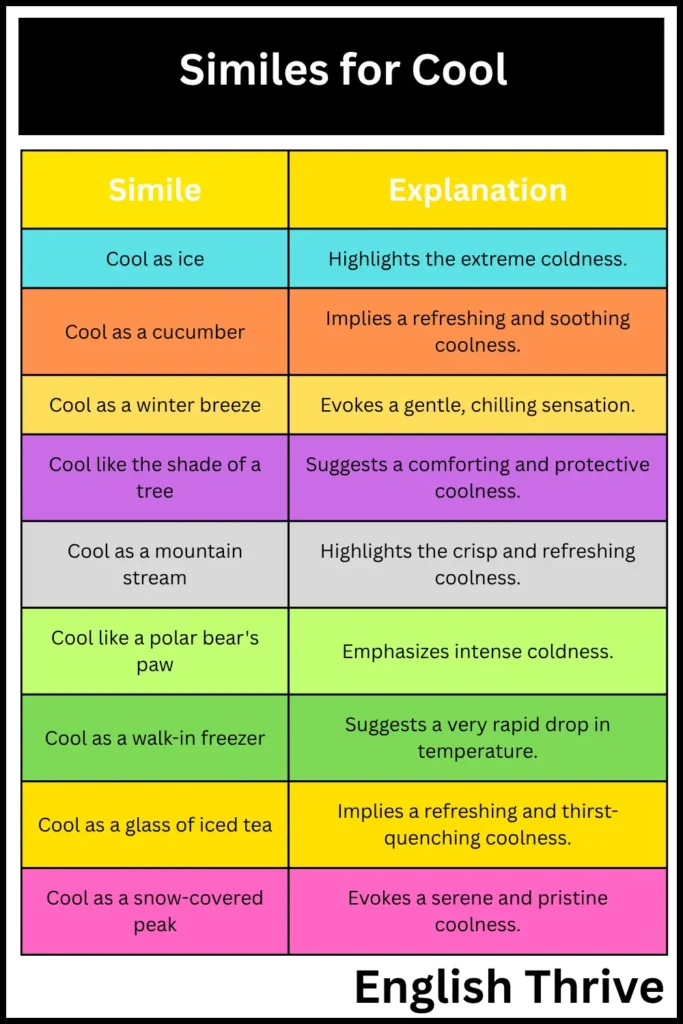
The following table provides examples of similes used to describe temperature, showcasing how different comparisons emphasize the sensation of coolness.
| Simile | Explanation |
|---|---|
| Cool as ice | Highlights the extreme coldness. |
| Cool as a cucumber | Implies a refreshing and soothing coolness. |
| Cool as a winter breeze | Evokes a gentle, chilling sensation. |
| Cool like the shade of a tree | Suggests a comforting and protective coolness. |
| Cool as a mountain stream | Highlights the crisp and refreshing coolness. |
| Cool like a polar bear’s paw | Emphasizes intense coldness. |
| Cool as a walk-in freezer | Suggests a very rapid drop in temperature. |
| Cool as a glass of iced tea | Implies a refreshing and thirst-quenching coolness. |
| Cool as a snow-covered peak | Evokes a serene and pristine coolness. |
| Cool like a refrigerated melon | Highlights the refreshing and juicy coolness. |
| Cool as an air conditioner | Suggests a controlled and consistent coolness. |
| Cool as a penguin’s habitat | Emphasizes the constant and icy environment. |
| Cool as a cellar | Implies a dark, damp, and refreshing coolness. |
| Cool like a deep ocean current | Highlights a subtle but persistent coolness. |
| Cool as a spring morning | Suggests a gentle and invigorating coolness. |
| Cool as dew on the grass | Evokes a fresh and delicate coolness. |
| Cool like a cave’s interior | Implies a constant and sheltered coolness. |
| Cool as a swimming pool | Highlights the refreshing and immersive coolness. |
| Cool as the night air | Suggests a calming and restorative coolness. |
| Cool as a chilled compress | Implies a soothing and therapeutic coolness. |
| Cool as a mint leaf | Highlights the refreshing and aromatic coolness. |
| Cool as a glacier | Evokes a massive and enduring coolness. |
| Cool like a misty morning | Suggests a gentle and enveloping coolness. |
| Cool as a frozen lake | Implies a still and profound coolness. |
| Cool as a basement | Highlights a dark, consistent temperature. |
| Cool like a block of dry ice | Emphasizes the extreme and sublimating coolness. |
 Similes for Cool
Examples of Similes for Personality
These similes describe a person’s composure, calmness, and ability to remain unfazed in stressful situations. The comparisons are typically made to things that are stable, unreactive, or inherently calm.
The table below provides examples of similes used to describe personality, illustrating how different comparisons emphasize composure and unflappability.
| Simile | Explanation |
|---|---|
| Cool as a cucumber | Implies calmness and composure under pressure. |
| Cool as a still pond | Suggests a serene and unflappable demeanor. |
| Cool like a zen master | Highlights a centered and peaceful disposition. |
| Cool as a stone statue | Emphasizes a stoic and unyielding composure. |
| Cool as a seasoned diplomat | Implies experience and grace under pressure. |
| Cool like a surgeon in the operating room | Highlights focus and precision under stress. |
| Cool as a bomb disposal expert | Suggests courage and calm in dangerous situations. |
| Cool as a poker player with a royal flush | Implies confidence and control in a high-stakes situation. |
| Cool as a cat | Emphasizes self-assuredness and elegance. |
| Cool as a collected librarian | Suggests knowledge and calmness in a structured environment. |
| Cool like a meditating monk | Highlights inner peace and emotional balance. |
| Cool as a calm ocean | Suggests a vast and undisturbed serenity. |
| Cool as a chess grandmaster | Implies strategic thinking and composure under pressure. |
| Cool like a pilot during turbulence | Highlights skill and control in challenging conditions. |
| Cool as a rock | Emphasizes solidity and emotional stability. |
| Cool as a glacier moving slowly | Suggests a deliberate and unhurried composure. |
| Cool like a veteran detective | Implies experience and a calm approach to solving mysteries. |
| Cool as an unruffled swan | Highlights grace and composure on the surface. |
| Cool as a silent judge | Suggests impartiality and unflappability. |
| Cool as a seasoned astronaut | Implies expertise and calm in extreme conditions. |
| Cool as a sphinx | Emphasizes mystery and unreadable composure. |
| Cool as a secret agent | Suggests stealth, confidence, and control. |
| Cool like a mountain peak | Highlights strength and unyielding composure. |
| Cool as an ancient tree | Implies wisdom and calm from enduring experiences. |
| Cool as an iceberg | Emphasizes a calm exterior hiding unseen depth. |
Examples of Similes for Style
These similes describe someone or something that is fashionable, trendy, and aesthetically pleasing. The comparisons are made to things that are considered modern, innovative, or visually appealing.
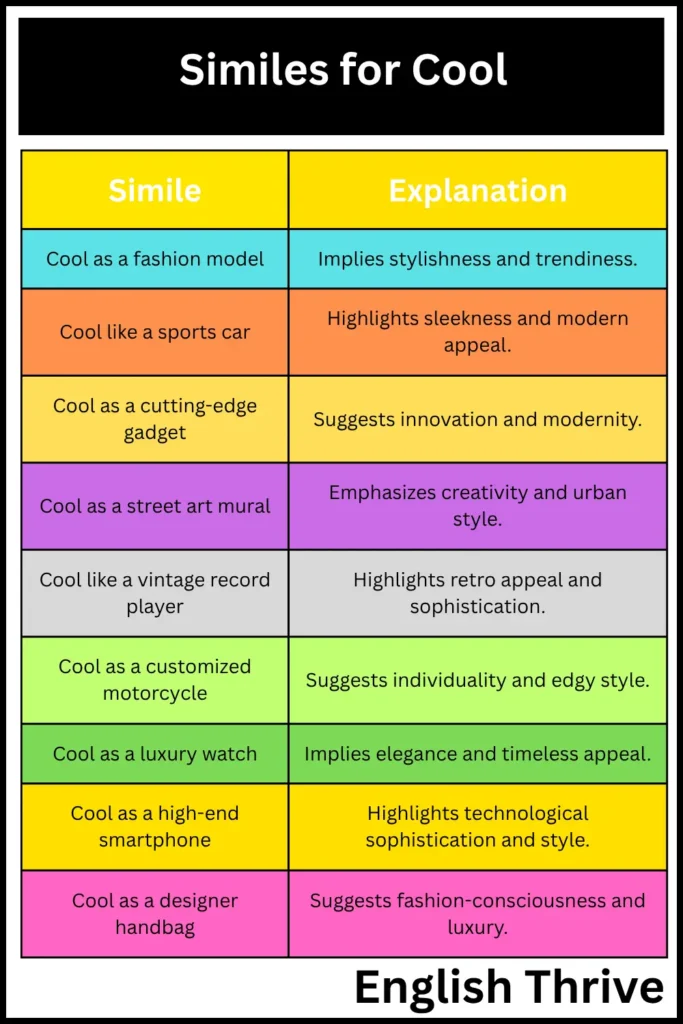
The following table provides examples of similes used to describe style, illustrating how different comparisons emphasize trendiness and aesthetic appeal.
| Simile | Explanation |
|---|---|
| Cool as a fashion model | Implies stylishness and trendiness. |
| Cool like a sports car | Highlights sleekness and modern appeal. |
| Cool as a cutting-edge gadget | Suggests innovation and modernity. |
| Cool as a street art mural | Emphasizes creativity and urban style. |
| Cool like a vintage record player | Highlights retro appeal and sophistication. |
| Cool as a customized motorcycle | Suggests individuality and edgy style. |
| Cool as a luxury watch | Implies elegance and timeless appeal. |
| Cool as a high-end smartphone | Highlights technological sophistication and style. |
| Cool as a designer handbag | Suggests fashion-consciousness and luxury. |
| Cool like a limited edition sneaker | Implies exclusivity and trendiness. |
| Cool as a minimalist apartment | Highlights modern design and simplicity. |
| Cool as a perfectly tailored suit | Suggests sophistication and attention to detail. |
| Cool as a celebrity stylist’s creation | Implies high fashion and influence. |
| Cool like a newly released video game | Highlights modernity and entertainment value. |
| Cool as an art gallery opening | Suggests cultural sophistication and style. |
| Cool as a rooftop bar at sunset | Implies trendiness and a vibrant atmosphere. |
| Cool like a limited-edition vinyl record | Highlights collector’s appeal and retro style. |
| Cool as a state-of-the-art electric car | Suggests innovation and environmental consciousness. |
| Cool as a bespoke suit | Implies high quality and unique style. |
| Cool as a private jet | Highlights luxury and exclusivity. |
| Cool as a hidden speakeasy | Suggests exclusivity and vintage charm. |
| Cool as a flagship store | Implies trend-setting influence and design. |
| Cool like a designer coffee shop | Highlights modern aesthetics and social appeal. |
| Cool as a pop-up art exhibit | Suggests temporary trendiness and creativity. |
| Cool as a smart home setup | Implies technological advancement and convenience. |
Similes for Cool
Examples of Similes for Lack of Enthusiasm
These similes describe someone who is indifferent, unexcited, or unimpressed. The comparisons are made to things that are passive, unresponsive, or lacking in energy.
The table below provides examples of similes used to describe a lack of enthusiasm, illustrating how different comparisons emphasize indifference and apathy.
| Simile | Explanation |
|---|---|
| Cool as a dead fish | Implies complete lack of enthusiasm or life. |
| Cool like a robot | Highlights a mechanical and emotionless demeanor. |
| Cool as a blank stare | Suggests a lack of comprehension or interest. |
| Cool as a stone wall | Emphasizes emotional detachment and unresponsiveness. |
| Cool like a forgotten statue | Highlights neglect and lack of animation. |
| Cool as a zombie | Suggests a lifeless and unenthusiastic state. |
| Cool as an empty room | Implies a lack of warmth or emotion. |
| Cool as a discarded newspaper | Highlights being unwanted and ignored. |
| Cool as a ghost | Suggests an ethereal and detached presence. |
| Cool like an automated voice | Implies a lack of personal connection or warmth. |
| Cool as a dial tone | Highlights a monotonous and uninteresting sound. |
| Cool as a mannequin | Suggests artificiality and lack of genuine emotion. |
| Cool as a distant planet | Implies remoteness and lack of engagement. |
| Cool like a recorded message | Highlights impersonality and lack of spontaneity. |
| Cool as a gray cloud | Suggests gloom and lack of brightness. |
| Cool as a dried-up riverbed | Implies a lack of vitality and energy. |
| Cool like a silent movie | Highlights a lack of sound and emotional expression. |
| Cool as a turned-off screen | Suggests inactivity and lack of engagement. |
| Cool as an abandoned building | Implies desolation and lack of warmth. |
| Cool as a faded photograph | Highlights a loss of vibrancy and interest. |
Usage Rules for Similes
Using similes effectively requires understanding certain rules. First, ensure that the comparison is logical and resonates with the intended meaning.
The object of comparison should share a quality with the subject that is being highlighted. Second, avoid clichés.
Overused similes can make your writing sound unoriginal and uninspired. Instead, strive to create fresh and imaginative comparisons.
Third, consider your audience. The effectiveness of a simile depends on whether your audience understands the comparison being made.
Key Rules:
- Logical Comparison: The comparison must make sense and highlight a shared quality.
- Avoid Clichés: Use original and creative comparisons rather than overused phrases.
- Audience Awareness: Ensure the comparison is understandable and relatable to your audience.
Common Mistakes with Similes
One common mistake is using similes that are clichés. For example, “cool as a cucumber” is a well-known simile, but it can sound unoriginal if overused.
Another mistake is making illogical comparisons. The object of comparison should have a clear and relevant connection to the subject being described.
Additionally, mixing metaphors and similes can lead to confusion. Maintain consistency in your figurative language.
Here are some examples of common mistakes and their corrections:
| Incorrect | Correct | Explanation |
|---|---|---|
| He was cool as a cucumber, which grew on a tree. | He was cool as a cucumber. | Avoid adding unnecessary or irrelevant details. |
| She was cool like the sun. | She was cool like a winter breeze. | Ensure the comparison is logical and relevant to “coolness.” |
| The car was a cool metaphor, like a speeding bullet. | The car was cool like a speeding bullet. | Maintain consistency; don’t mix metaphors and similes. |
Practice Exercises: Similes for Cool
Test your understanding of similes for “cool” with these exercises. Each exercise focuses on different aspects of simile usage, from identifying correct similes to creating your own.
Exercise 1: Identifying Correct Similes
Choose the sentence that correctly uses a simile to describe “coolness.”
| Question | Options | Answer |
|---|---|---|
| Which sentence correctly uses a simile to describe temperature? | a) The soup was cool as a fire. b) The soup was cool as ice. c) The soup was cool with ice. | b) The soup was cool as ice. |
| Which sentence correctly uses a simile to describe personality? | a) He was cool like the sun. b) He was cool as a cucumber. c) He was cool because cucumber. | b) He was cool as a cucumber. |
| Which sentence correctly uses a simile to describe style? | a) The car was cool as a rocket. b) The car was cool like a slow train. c) The car was cool than a rocket. | a) The car was cool as a rocket. |
| Which sentence correctly uses a simile to describe a lack of enthusiasm? | a) He was cool as fire. b) He was cool as a dead fish. c) He was cool with enthusiasm. | b) He was cool as a dead fish. |
| Which sentence correctly uses a simile to describe temperature? | a) The drink was cool because ice. b) The drink was cool like the sun. c) The drink was cool as a glacier. | c) The drink was cool as a glacier. |
| Which sentence correctly uses a simile to describe personality? | a) She was cool like a volcano. b) She was cool as a still pond. c) She was cool because pond. | b) She was cool as a still pond. |
| Which sentence correctly uses a simile to describe style? | a) The outfit was cool than fashion. b) The outfit was cool as a fashion model. c) The outfit was cool with fashion. | b) The outfit was cool as a fashion model. |
| Which sentence correctly uses a simile to describe a lack of enthusiasm? | a) He was cool with excitement. b) He was cool like a robot. c) He was cool than a robot. | b) He was cool like a robot. |
| Which sentence correctly uses a simile to describe temperature? | a) The air was cool than ice. b) The air was cool as a winter breeze. c) The air was cool with breeze. | b) The air was cool as a winter breeze. |
| Which sentence correctly uses a simile to describe personality? | a) She was cool than a cucumber. b) She was cool with cucumber. c) She was cool as a seasoned diplomat. | c) She was cool as a seasoned diplomat. |
Exercise 2: Completing Similes
Complete the following sentences with an appropriate object of comparison to create a simile for “coolness.”
| Question | Answer |
|---|---|
| The air conditioning made the room as cool as __________. | a walk-in freezer |
| He remained as cool as __________ during the crisis. | a zen master |
| Her new outfit was as cool as __________. | a fashion model |
| His reaction was as cool as __________. | a stone wall |
| The lemonade was as cool as __________. | a mountain stream |
| She handled the situation as cool as __________. | a seasoned astronaut |
| The design of the building was as cool as __________. | a cutting-edge gadget |
| His response was as cool as __________. | a dial tone |
| The evening breeze was as cool as __________. | dew on the grass |
| He approached the task as cool as __________. | a chess grandmaster |
Exercise 3: Creating Your Own Similes
Create your own simile for “coolness” in each of the following categories.
| Category | Your Simile |
|---|---|
| Temperature | Cool as a deep sea |
| Personality | Cool like a silent movie |
| Style | Cool as a vintage record player |
| Lack of Enthusiasm | Cool as a mannequin |
Advanced Topics in Similes
For advanced learners, exploring the nuances of simile creation and application can further enhance their writing and communication skills. This includes understanding the use of irony and satire in similes, as well as the cultural and contextual considerations that can affect their interpretation.
Additionally, experimenting with more complex and unconventional comparisons can lead to more creative and impactful writing.
For example, consider the simile “He was as cool as a burning building.” This simile uses irony to convey the opposite of coolness, highlighting chaos and lack of control. Understanding such nuances allows for more sophisticated and nuanced use of similes.
FAQs About Similes for Cool
Here are some frequently asked questions about similes, particularly in the context of describing “coolness.”
What is the difference between a simile and a metaphor?
A simile compares two things using “like” or “as,” while a metaphor directly equates two things without using these words. For example, “He is cool as ice” (simile) vs. “He is ice” (metaphor).
Why are similes useful in writing?
Similes make descriptions more vivid, engaging, and understandable by relating unfamiliar things to familiar ones. They help create a clearer picture in the reader’s mind.
How can I avoid using clichés in my similes?
Strive to create original and imaginative comparisons. Think outside the box and consider unique qualities or characteristics that can be used to describe the subject.
Can a simile be too complex?
Yes, if the comparison is too obscure or difficult to understand, it can confuse the reader. The best similes are clear, concise, and relatable.
How do I choose the right simile for a specific context?
Consider the specific aspect of “coolness” you want to convey (temperature, personality, style, etc.) and choose a comparison that aligns with that meaning. Also, think about your audience and what they will understand.
Conclusion: Similes for Cool
Mastering the use of similes for “cool” enhances your ability to express nuances in temperature, personality, style, and even a lack of enthusiasm. By understanding the structural elements of similes, avoiding clichés, and considering your audience, you can craft vivid and engaging descriptions.
Remember to practice creating your own similes and analyzing how they are used in various contexts.
Similes are a powerful tool in the English language, allowing for creative and impactful communication. By continually honing your skills in simile creation and application, you can elevate your writing and speaking, making your language more descriptive and engaging.
Embrace the art of comparison and let your creativity shine through your use of similes.