

Have you ever wondered about the incredible diversity of animals that start with C? From the majestic cheetah to the tiny cricket, these creatures showcase the amazing variety of life on Earth. Diving into the world of animals that start with C is like opening a treasure chest filled with fascinating stories and unique characteristics. As someone who has always been captivated by nature, I’ve found that understanding these animals deepens my appreciation for the natural world. So, let’s embark on this exciting journey together! By the end, you’ll not only know more about these amazing creatures but also gain a deeper respect for the roles they play in their ecosystems. Ready to dive in? Let’s explore the fascinating world of animals that start with C!
The Fascinating World of Animals that Start with C
Camel
- Scientific Name: Camelus
- Habitat: Deserts and arid regions
- Diet: Herbivorous, feeding on grasses, leaves, and shrubs
- Size: Up to 7 feet in height
- Lifespan: Up to 50 years
Camels are known for their distinctive humps, which store fat and help them survive in harsh desert environments. They have unique adaptations, such as the ability to close their nostrils and seal their lips to keep out sand and dust. Camels play a crucial role in desert ecosystems and have been domesticated for thousands of years.
Capybara
- Scientific Name: Hydrochoerus hydrochaeris
- Habitat: Freshwater habitats, such as rivers, lakes, and marshes
- Diet: Herbivorous, feeding on grasses, aquatic plants, and fruits
- Size: Up to 4 feet in length
- Lifespan: Up to 10 years in the wild
Capybaras are the largest rodents in the world and are semi-aquatic mammals. They have webbed feet and are excellent swimmers. Capybaras are social animals that live in groups and are known for their ability to communicate through vocalizations and scent marking. They play an important role in their ecosystems by controlling aquatic plant growth.
Caracal
- Scientific Name: Caracal caracal
- Habitat: Deserts, scrublands, and savannas
- Diet: Carnivorous, feeding on small mammals, birds, and reptiles
- Size: Up to 3 feet in length
- Lifespan: Up to 17 years in the wild
Caracals are medium-sized wild cats known for their distinctive tufted ears and long legs. They are solitary hunters and have excellent hearing and vision, which helps them locate prey in low light conditions. Caracals are also known for their ability to leap high into the air to catch birds in flight.
Cardinal
- Scientific Name: Cardinalis cardinalis
- Habitat: Forests, wetlands, and urban areas
- Diet: Omnivorous, feeding on insects, seeds, and fruits
- Size: Up to 9 inches in length
- Lifespan: Up to 15 years in the wild
Cardinals are vibrant red birds known for their distinctive crests and strong beaks. They are non-migratory and are often seen in pairs or small groups. Cardinals are known for their beautiful songs and play an important role in seed dispersal and insect control in their habitats.
Caribou
- Scientific Name: Rangifer tarandus
- Habitat: Tundra, taiga, and forests
- Diet: Herbivorous, feeding on lichens, grasses, and shrubs
- Size: Up to 7 feet in length
- Lifespan: Up to 15 years in the wild
Caribou, also known as reindeer, are large deer species adapted to cold environments. They have wide hooves that help them walk on snow and ice. Caribou are known for their long migrations and play a crucial role in the ecosystems of the Arctic and subarctic regions.
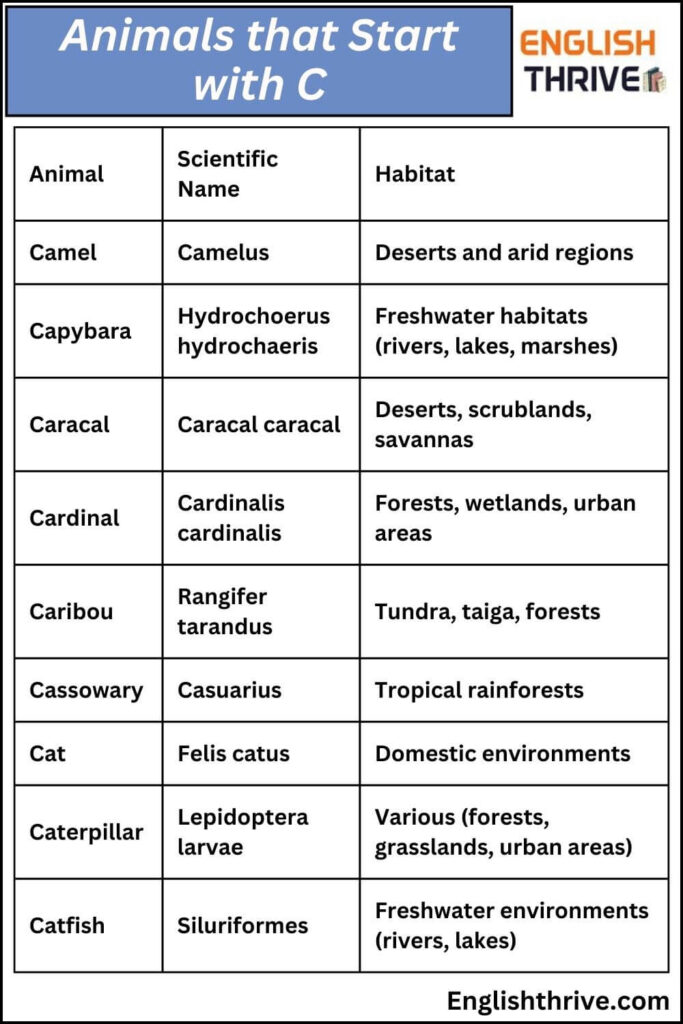
Table of Animals that Start with C
| Animal | Scientific Name | Habitat | Diet | Size | Lifespan |
|---|---|---|---|---|---|
| Camel | Camelus | Deserts and arid regions | Herbivorous (grasses, leaves, shrubs) | Up to 7 feet in height | Up to 50 years |
| Capybara | Hydrochoerus hydrochaeris | Freshwater habitats (rivers, lakes, marshes) | Herbivorous (grasses, aquatic plants, fruits) | Up to 4 feet in length | Up to 10 years |
| Caracal | Caracal caracal | Deserts, scrublands, savannas | Carnivorous (small mammals, birds, reptiles) | Up to 3 feet in length | Up to 17 years |
| Cardinal | Cardinalis cardinalis | Forests, wetlands, urban areas | Omnivorous (insects, seeds, fruits) | Up to 9 inches in length | Up to 15 years |
| Caribou | Rangifer tarandus | Tundra, taiga, forests | Herbivorous (lichens, grasses, shrubs) | Up to 7 feet in length | Up to 15 years |
| Cassowary | Casuarius | Tropical rainforests | Omnivorous (fruits, seeds, small animals) | Up to 6 feet in height | Up to 50 years |
| Cat | Felis catus | Domestic environments | Omnivorous (varied diet) | Up to 3 feet in length | Up to 15 years |
| Caterpillar | Lepidoptera larvae | Various (forests, grasslands, urban areas) | Herbivorous (leaves, plants) | Up to 5 inches in length | Up to 2-4 weeks (larval stage) |
| Catfish | Siluriformes | Freshwater environments (rivers, lakes) | Omnivorous (insects, plants, small animals) | Up to 5 feet in length | Up to 20 years |
| Cattle | Bos taurus | Domestic environments, grasslands | Herbivorous (grasses, leaves) | Up to 6 feet in height | Up to 20 years |
| Centipede | Chilopoda | Various (forests, grasslands, urban areas) | Carnivorous (insects, small animals) | Up to 12 inches in length | Up to 6 years |
| Cheetah | Acinonyx jubatus | Savannas, grasslands | Carnivorous (small mammals, birds) | Up to 5 feet in length | Up to 12 years |
| Chimpanzee | Pan troglodytes | Tropical rainforests, savannas | Omnivorous (fruits, insects, small animals) | Up to 5.5 feet in height | Up to 50 years |
| Chinchilla | Chinchilla lanigera | Deserts, scrublands | Herbivorous (grasses, leaves, seeds) | Up to 1 foot in length | Up to 10 years |
| Chipmunk | Tamias | Forests, woodlands | Omnivorous (nuts, seeds, insects) | Up to 11 inches in length | Up to 10 years |
| Cicada | Cicadidae | Various (forests, grasslands, urban areas) | Herbivorous (plant sap) | Up to 2 inches in length | Up to 17 years (including larval stage) |
| Civet | Viverridae | Tropical rainforests, savannas | Omnivorous (fruits, insects, small animals) | Up to 3 feet in length | Up to 20 years |
| Clam | Bivalvia | Marine and freshwater environments | Filter-feeding (plankton, small particles) | Up to 9 inches in length | Up to 50 years |
| Clownfish | Amphiprioninae | Coral reefs | Omnivorous (algae, small invertebrates) | Up to 4 inches in length | Up to 10 years |
| Cobra | Naja | Various (forests, grasslands, deserts) | Carnivorous (small mammals, birds, reptiles) | Up to 7 feet in length | Up to 20 years |
| Cockatoo | Cacatuidae | Tropical rainforests, woodlands | Herbivorous (fruits, seeds, nuts) | Up to 2 feet in length | Up to 60 years |
| Cockroach | Blattodea | Various (urban areas, forests, grasslands) | Omnivorous (decaying matter, small animals) | Up to 2 inches in length | Up to 1 year |
| Cod | Gadus morhua | Marine environments | Carnivorous (small fish, crustaceans) | Up to 6 feet in length | Up to 25 years |
| Common Loon | Gavia immer | Freshwater lakes and rivers | Carnivorous (fish, crustaceans) | Up to 3 feet in length | Up to 30 years |
| Coqui Frog | Eleutherodactylus coqui | Tropical rainforests | Insectivorous (insects) | Up to 2 inches in length | Up to 5 years |
| Coral | Cnidaria | Marine environments | Carnivorous (small marine animals) | Varied | Varied |
| Cougar | Puma concolor | Various (forests, mountains, deserts) | Carnivorous (small mammals, birds) | Up to 9 feet in length | Up to 15 years |
| Cow | Bos taurus | Domestic environments, grasslands | Herbivorous (grasses, leaves) | Up to 6 feet in height | Up to 20 years |
| Coyote | Canis latrans | Various (forests, grasslands, deserts) | Omnivorous (small mammals, fruits, insects) | Up to 4 feet in length | Up to 14 years |
| Crab | Brachyura | Marine and freshwater environments | Omnivorous (algae, small animals, detritus) | Up to 1 foot in width | Up to 3 years |
| Crane | Gruidae | Wetlands, grasslands | Omnivorous (insects, small animals, plants) | Up to 5 feet in height | Up to 20 years |
| Cricket | Gryllidae | Various (forests, grasslands, urban areas) | Omnivorous (plants, insects) | Up to 2 inches in length | Up to 1 year |
| Crocodile | Crocodylidae | Freshwater environments (rivers, lakes, swamps) | Carnivorous (fish, birds, mammals) | Up to 20 feet in length | Up to 70 years |
| Crow | Corvus | Various (forests, grasslands, urban areas) | Omnivorous (insects, small animals, fruits) | Up to 2 feet in length | Up to 20 years |
| Cuckoo | Cuculidae | Various (forests, grasslands) | Insectivorous (insects) | Up to 1 foot in length | Up to 10 years |
| Cuscus | Phalangeridae | Tropical rainforests | Herbivorous (fruits, leaves, flowers) | Up to 2 feet in length | Up to 15 years |
| Cuttlefish | Sepiida | Marine environments | Carnivorous (small fish, crustaceans) | Up to 1 foot in length | Up to 2 years |
FAQs On Animals that Start with C
What are some common animals that start with C?
Some common animals that start with C include camels, capybaras, caracals, cardinals, and caribou. These animals are found in various habitats around the world and have unique characteristics and behaviors that make them fascinating to study.
What is the largest animal that starts with C?
The largest animal that starts with C is the camel. Camels can grow up to 7 feet in height and weigh as much as 1,500 pounds. They are known for their distinctive humps, which store fat and help them survive in harsh desert environments.
What is the smallest animal that starts with C?
The smallest animal that starts with C is the cricket. Crickets are typically about 2 inches in length and are known for their chirping sounds, which are produced by rubbing their wings together.
What are some endangered animals that start with C?
Some endangered animals that start with C include the cheetah, the chimpanzee, and the cuscus. These animals face threats due to habitat loss, poaching, and other human activities. Conservation efforts are underway to protect these species and their habitats.
What are some unique adaptations of animals that start with C?
Animals that start with C have a variety of unique adaptations that help them survive in their environments. For example, camels have humps that store fat and help them survive in harsh desert environments. Capybaras have webbed feet and are excellent swimmers, which helps them navigate their aquatic habitats. Caracals have tufted ears and long legs, which help them hunt effectively in low light conditions.
What are some interesting facts about animals that start with C?
There are many interesting facts about animals that start with C. For example, camels can close their nostrils and seal their lips to keep out sand and dust. Capybaras are the largest rodents in the world and are known for their social behavior. Caracals can leap high into the air to catch birds in flight. Cardinals are known for their beautiful songs and vibrant red feathers. Caribou are adapted to cold environments and are known for their long migrations.
Conclusion On Animals that Start with C
In this comprehensive guide, we’ve explored the fascinating world of animals that start with C. From the majestic camel to the tiny cricket, each creature has unique characteristics and behaviors that make them well-suited to their environments. Understanding these animals not only enriches our knowledge but also deepens our appreciation for the diversity of life on Earth.
As we’ve journeyed through this list, we’ve discovered the importance of conservation and the roles these animals play in their ecosystems. Many of these species face threats due to habitat loss, climate change, and human activities. By learning about and appreciating these animals, we can contribute to efforts to protect them and preserve their habitats.
So, the next time you encounter an animal that starts with C, take a moment to recall its unique name and the story behind it. Share this knowledge with others, and together, we can foster a deeper connection with the natural world. Let’s continue to explore, learn, and appreciate the incredible diversity of animals that start with C