

Dialogue with Doctor and Patient
Doctor and patient dialogues help learners understand how to talk politely during a medical visit. These conversations are useful for daily life, school exams, and spoken English practice.
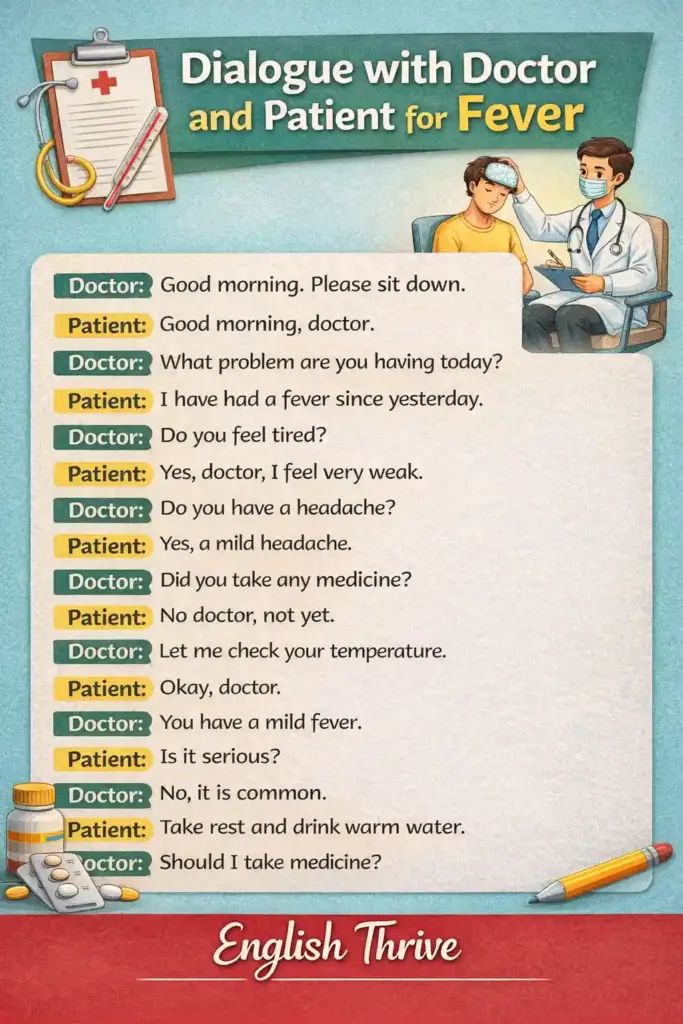
Sample 1: Dialogue with Doctor and Patient for Fever
Context: A patient visits the doctor due to fever and body weakness.
Doctor: “Good morning. Please sit down.”
Patient: “Good morning, doctor.”
Doctor: “What problem are you having today?”
Patient: “I have had a fever since yesterday.”
Doctor: “Do you feel tired?”
Patient: “Yes, doctor, I feel very weak.”
Doctor: “Do you have a headache?”
Patient: “Yes, a mild headache.”
Doctor: “Did you take any medicine?”
Patient: “No doctor, not yet.”
Doctor: “Let me check your temperature.”
Patient: “Okay, doctor.”
Doctor: “You have a mild fever.”
Patient: “Is it serious?”
Doctor: “No, it is common.”
Patient: “What should I do?”
Doctor: “Take rest and drink warm water.”
Patient: “Should I take medicine?”
Doctor: “Yes, take this tablet twice a day.”
Sample 2: Dialogue with Doctor and Patient for Stomach Pain
Context: A patient meets the doctor after eating unhealthy food.
Doctor: “Hello. What brings you here?”
Patient: “Hello doctor, I have stomach pain.”
Doctor: “Since when have you had pain?”
Patient: “Since last night.”
Doctor: “Did you eat outside food?”
Patient: “Yes, doctor.”
Doctor: “Do you feel like vomiting?”
Patient: “Yes, a little.”
Doctor: “Do you have loose motion?”
Patient: “Yes, once today.”
Doctor: “Let me check you.”
Patient: “Okay, doctor.”
Doctor: “It is a food infection.”
Patient: “Is it dangerous?”
Doctor: “No, it will be fine.”
Patient: “What should I eat?”
Doctor: “Eat light food only.”
Patient: “Can I drink tea?”
Doctor: “Yes, but avoid spicy food.”
Sample 3: Dialogue with Doctor and Patient for Cough and Cold
Context: A patient visits the doctor due to a cough caused by weather change.
Doctor: “Good afternoon.”
Patient: “Good afternoon, doctor.”
Doctor: “What is your problem?”
Patient: “I have a cough and cold.”
Doctor: “For how many days?”
Patient: “For three days.”
Doctor: “Do you have a fever?”
Patient: “No doctor.”
Doctor: “Is your throat sore?”
Patient: “Yes, a little.”
Doctor: “Do you smoke?”
Patient: “No doctor.”
Doctor: “Let me check your throat.”
Patient: “Alright, doctor.”
Doctor: “It is a common cold.”
Patient: “Do I need medicine?”
Doctor: “Yes, take this syrup.”
Patient: “Any home remedy?”
Doctor: “Drink warm water.”
Sample 4: Dialogue with Doctor and Patient for Headache
Context: A patient visits the doctor due to stress and headache.
Doctor: “Hello, please come in.”
Patient: “Hello, doctor.”
Doctor: “What is troubling you?”
Patient: “I have a headache daily.”
Doctor: “Do you work late?”
Patient: “Yes, doctor.”
Doctor: “Do you sleep well?”
Patient: “No, I sleep very late.”
Doctor: “Do you use a mobile at night?”
Patient: “Yes, a lot.”
Doctor: “That causes headache.”
Patient: “Is it serious?”
Doctor: “No, but you need rest.”
Patient: “What should I do?”
Doctor: “Sleep early.”
Patient: “Any medicine?”
Doctor: “Only if pain increases.”
Patient: “Thank you, doctor.”
Doctor: “Take care.”
Sample 5: Dialogue with Doctor and Patient for General Checkup
Context: A patient comes for a regular health checkup.
Doctor: “Good morning.”
Patient: “Good morning, doctor.”
Doctor: “Why are you here today?”
Patient: “I came for a checkup.”
Doctor: “That is good.”
Patient: “Yes, doctor.”
Doctor: “Do you exercise?”
Patient: “Yes, daily walk.”
Doctor: “Do you eat junk food?”
Patient: “Very rarely.”
Doctor: “Any health problems?”
Patient: “No doctor.”
Doctor: “Let me check your weight.”
Patient: “Okay.”
Doctor: “Your health is good.”
Patient: “That is great.”
Doctor: “Continue healthy habits.”
Patient: “Thank you, doctor.”
Doctor: “Visit again after six months.”
FAQs – Dialogue with Doctor and Patient
1. Why are doctor and patient dialogues important for beginners?
They help learners practice real-life conversations in simple English.
2. What language should be used in such dialogues?
Simple, polite, and clear language is best.
3. Are these dialogues useful for exams?
Yes, they are helpful for school exams and spoken English practice.