

When you think of animals, you probably picture all sorts of creatures from the wild, from the majestic to the quirky. Have you ever stopped to wonder about those animals that start with the letter “R”? It might not be as common a starting letter as some, but you’ll be surprised by the variety and intrigue this collection holds. From the soaring eagle to the rugged rhino, animals that start with R span across land, air, and sea, each possessing unique traits and stories to tell. In this article, we’ll explore a wide range of fascinating creatures, giving you an up-close look at their habitat, diet, and fun facts. Let’s dive in and discover some remarkable animals that start with R!
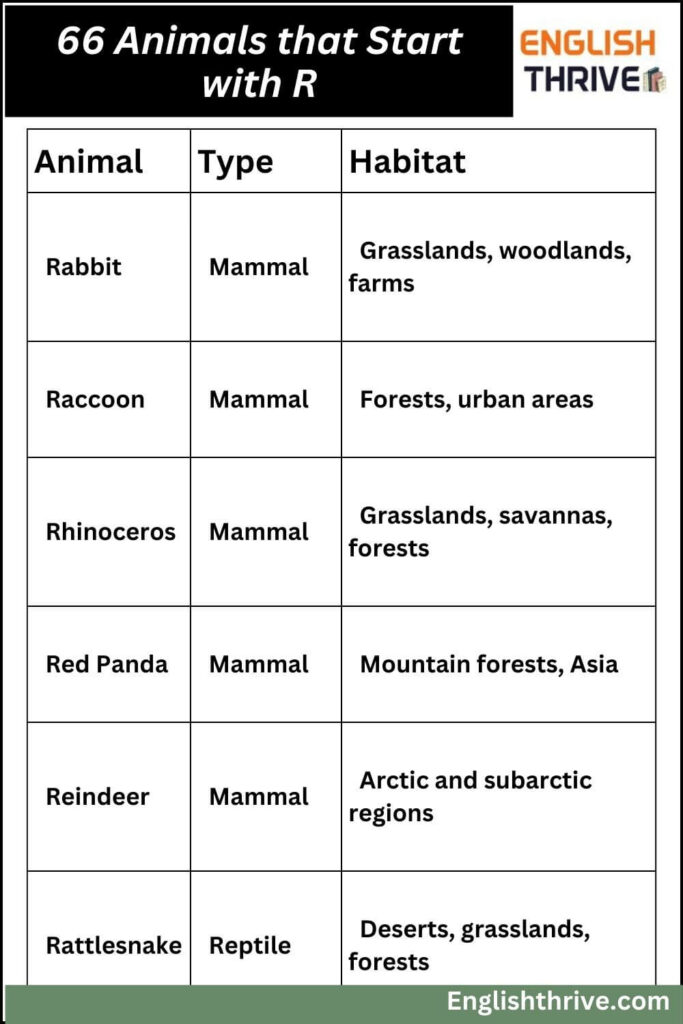
66 Animals that Start with R
| Animal | Type | Habitat | Diet | Interesting Fact |
|---|---|---|---|---|
| Rabbit | Mammal | Grasslands, woodlands, farms | Herbivore: Grass, vegetables | Known for their powerful hind legs and ability to reproduce rapidly. |
| Raccoon | Mammal | Forests, urban areas | Omnivore: Fruits, insects, small animals | Recognizable for their “mask” of black fur around their eyes. |
| Rhinoceros | Mammal | Grasslands, savannas, forests | Herbivore: Grass, shrubs, fruits | One of the largest land mammals, with a thick skin and horn on its snout. |
| Red Panda | Mammal | Mountain forests, Asia | Omnivore: Bamboo, fruits, small animals | A small, arboreal mammal, often mistaken for a raccoon due to its similar appearance. |
| Reindeer | Mammal | Arctic and subarctic regions | Herbivore: Moss, lichen, grass | Known for their impressive antlers and their importance in Arctic ecosystems. |
| Rattlesnake | Reptile | Deserts, grasslands, forests | Carnivore: Small mammals, birds | Famous for the rattle at the end of their tail, a warning for predators. |
| Raven | Bird | Forests, mountains, tundra | Omnivore: Insects, carrion, berries | An intelligent bird with a rich, symbolic history in various cultures. |
| Red Fox | Mammal | Forests, grasslands, urban areas | Omnivore: Fruits, small mammals, birds | A cunning predator, known for their reddish-orange fur and bushy tail. |
| Rockhopper Penguin | Bird | Sub-Antarctic islands | Carnivore: Fish, squid, krill | Known for their distinctive “rock-hopping” behavior, making them unique among penguins. |
| Rhode Island Red | Bird (Domestic) | Farms, rural areas | Omnivore: Seeds, insects | A hardy breed of chicken known for laying dark brown eggs. |
| Red-Eyed Tree Frog | Amphibian | Tropical rainforests | Carnivore: Insects, spiders | A colorful amphibian with bright red eyes, often found in Central America. |
| River Otter | Mammal | Rivers, lakes, coastal marshes | Carnivore: Fish, crustaceans | Known for their playful behavior and ability to swim gracefully. |
| Ring-Tailed Lemur | Mammal | Madagascar (forests) | Omnivore: Fruits, leaves, insects | Known for their ringed tail and social structure in large groups. |
| Rough Green Snake | Reptile | Woodlands, grasslands | Carnivore: Insects, small lizards | A non-venomous snake with vibrant green scales, often seen in trees. |
| Redfish | Fish | Coastal waters, Gulf of Mexico | Carnivore: Fish, invertebrates | A popular fish in recreational fishing, often sought after for its size and strength. |
| River Shark | Fish | Rivers, coastal waters | Carnivore: Fish, small mammals | Rare and elusive, found in both saltwater and freshwater environments. |
| Ruddy Duck | Bird | Wetlands, ponds, lakes | Omnivore: Seeds, aquatic plants, insects | Notable for its striking breeding plumage and unique call. |
| Red-Spotted Newt | Amphibian | North American wetlands | Carnivore: Worms, insects, small fish | Known for its bright orange-red coloration and spotted body. |
| Roosevelt Elk | Mammal | Pacific Northwest forests | Herbivore: Grass, leaves, shrubs | A subspecies of elk with large antlers and a heavy body, named after Theodore Roosevelt. |
| Rough Collie | Mammal (Dog) | Homes, farms | Carnivore: Meat, dog food | Famous for its role in the TV show Lassie, a loyal and intelligent herding dog. |
| Red-Tailed Hawk | Bird of Prey | Grasslands, forests, deserts | Carnivore: Small mammals, birds | Known for its red tail feathers and sharp hunting abilities. |
| Red Kangaroo | Mammal | Australian Outback | Herbivore: Grass, shrubs, leaves | The largest of all kangaroo species, known for their powerful hind legs and long tail. |
| Rattail Fish | Fish | Deep oceans | Carnivore: Small fish, plankton | Named for its long, slender tail that resembles a rat’s tail. |
| Ruffed Grouse | Bird | Woodlands, forests | Omnivore: Seeds, berries, insects | Famous for its distinctive drumming sound during courtship. |
| Raggiana Bird of Paradise | Bird | Rainforests of Papua New Guinea | Omnivore: Fruits, seeds, insects | Known for its colorful plumage and dramatic courtship displays. |
| Red-Lipped Batfish | Fish | Deep waters, off the coast of the Galápagos Islands | Carnivore: Crustaceans, small fish | Unique for its red lips and the fact that it “walks” on the ocean floor using its fins. |
| Red-Shouldered Hawk | Bird of Prey | Woodlands, forests | Carnivore: Small mammals, birds | Distinguished by its reddish-brown shoulders and aggressive hunting style. |
| Raccoon Dog | Mammal | Forests of East Asia | Omnivore: Fruits, insects, small animals | Not a true raccoon, but resembles one with its black face markings. |
| Rhinoceros Beetle | Insect | Forests, tropical regions | Herbivore: Sap, fruit | Known for their large size and impressive horn, they are some of the strongest insects. |
| Rock Wallaby | Mammal | Rocky outcrops, forests | Herbivore: Grass, shrubs, leaves | Adapted to live in rocky, steep environments, capable of jumping long distances. |
| Rough-legged Buzzard | Bird of Prey | Arctic regions, tundra | Carnivore: Small mammals, birds | Known for its distinctive leg feathers and their ability to hover in the air. |
| Red-Headed Woodpecker | Bird | Woodlands, forests | Carnivore: Insects, tree sap | Identified by its striking red head and its drumming sound on trees. |
| Ragamuffin Cat | Mammal (Cat) | Homes | Carnivore: Wet cat food, dry food | A long-haired cat breed known for its soft, fluffy coat and gentle nature. |
| Ratel (Honey Badger) | Mammal | Savannas, grasslands, forests | Omnivore: Insects, small mammals | Known for its fearless nature and strong defense against predators. |
| Rough-Scaled Snake | Reptile | Australia, forests, deserts | Carnivore: Small mammals, lizards | Has rough scales that help it blend into its environment. |
| Redback Spider | Arachnid | Australia | Carnivore: Insects, small vertebrates | Famous for its venomous bite and red stripe on its back. |
| Rosa Snake | Reptile | Deserts, grasslands | Carnivore: Small mammals, birds | A non-venomous snake known for its reddish color. |
| Rough Greenshank | Bird | Wetlands, coastal marshes | Omnivore: Insects, small fish | Notable for its long legs and distinctive call. |
| Ringneck Parakeet | Bird | South Asia, tropical regions | Omnivore: Fruits, seeds, nuts | A vibrant green parrot with a distinctive black neck ring. |
| Rivulus Fish | Fish | Freshwater streams, tropical regions | Omnivore: Small insects, plankton | Known for their resilience and ability to live in temporary bodies of water. |
| Rockfish | Fish | Deep oceans, coastal areas | Carnivore: Smaller fish, crabs | A type of fish known for its rock-like appearance and ability to hide in rocky crevices. |
| Ragged Tooth Shark | Fish | Coastal waters | Carnivore: Fish, small mammals | Known for its jagged teeth and aggressive hunting techniques. |
| Red-Crowned Crane | Bird | Wetlands, East Asia | Omnivore: Fish, insects, plants | One of the rarest and most elegant species of crane, symbolizing longevity. |
| Rosenberg’s Shark | Fish | Coastal areas, tropical waters | Carnivore: Fish, squid | An elusive species with distinct markings and hunting style. |
| Red-Backed Shrike | Bird | Grasslands, woodlands | Carnivore: Insects, small birds | Known for its habit of impaling prey on thorns. |
| Rainbow Trout | Fish | Freshwater streams and lakes | Carnivore: Insects, small fish | A beautiful fish often seen in crystal-clear streams, prized by fishermen. |
| Rocker Spider | Arachnid | Desert regions, caves | Carnivore: Insects, small reptiles | A rare species with specialized hunting techniques. |
| Red Ant | Insect | Forests, grasslands | Omnivore: Small insects, plants | Famous for their aggressive behavior and painful sting. |
FAQs On Animals that start with R
What are the key characteristics of a rabbit?
Rabbits are known for their long ears, powerful hind legs, and distinctive hopping movements. These mammals are herbivores, typically eating grass, vegetables, and leaves. They are very prolific breeders, capable of producing large litters in a short time. Rabbits also have large, soft eyes that help them detect predators quickly, a necessity for their survival in the wild. Their fur can come in a variety of colors, and domesticated rabbits are popular pets worldwide.
Why are raccoons considered highly intelligent?
Raccoons are often noted for their exceptional problem-solving abilities and intelligence. They have dexterous front paws, almost resembling human hands, which allow them to open containers, doors, and even doors. This trait is particularly useful for foraging in urban environments, where they are adept at finding food in trash cans or other areas. Their curiosity and ability to learn make them one of the most adaptable animals in the animal kingdom.
How does a rhinoceros protect itself in the wild?
Rhinoceroses are large, heavy mammals with thick skin that acts as armor. Though not particularly fast, they can charge at high speeds when threatened, using their massive horns as weapons. The horns are made of keratin (the same material as human hair and nails), and can grow to impressive lengths. Rhinos are solitary creatures and often prefer to stay away from potential threats. However, when confronted, their sheer size and strength make them formidable opponents.
What is the difference between a red panda and a giant panda?
The red panda is much smaller than the giant panda and has a reddish-brown coat with a long, bushy tail. Unlike the giant panda, which is a herbivore, the red panda has a more varied diet, including fruits, bamboo, and small insects. Red pandas are also more arboreal, meaning they spend much of their time in trees. They are primarily found in the mountainous regions of the Himalayas and are known for their playful and solitary nature. Giant pandas, on the other hand, are primarily found in bamboo forests in China and are more terrestrial.
How fast can a rattlesnake strike?
A rattlesnake can strike incredibly quickly, sometimes in just a fraction of a second. Its strike is often a defensive maneuver when it feels threatened. The snake uses its potent venom to immobilize prey or deter predators. Though its bite can be dangerous, rattlesnakes are not typically aggressive and will usually try to escape rather than attack. They rely on their rattle as a warning signal, giving them time to flee if necessary.
Conclusion On Animals that Start with R
Exploring animals that start with R reveals a fascinating diversity across the animal kingdom. From the majestic rhinoceros to the playful raccoon, and the unique rockhopper penguin, these animals not only showcase the complexity of nature but also highlight the importance of conservation efforts. Many of these species play crucial roles in their respective ecosystems, whether it’s through their behavior, diet, or the habitats they create.
Whether you’re a student, an animal enthusiast, or just curious about the wildlife around the world, learning about these creatures gives us a deeper appreciation of the natural world. Each species listed here is a testament to the incredible variety that exists, and many face challenges from environmental changes and human impact. By understanding and respecting these animals, we take an important step toward ensuring their survival for generations to come.
So, the next time you hear about an animal starting with “R”, you’ll be able to appreciate the richness and diversity that they bring to our planet. Let’s continue to learn, share, and protect the amazing creatures that share our world!