

Have you ever wondered about the incredible diversity of animals that start with B? From the mighty bear to the tiny beetle, these creatures showcase the amazing variety of life on Earth. Diving into the world of animals that start with B is like opening a treasure chest filled with fascinating stories and unique characteristics. As someone who has always been captivated by nature,
I’ve found that understanding these animals deepens my appreciation for the natural world. So, let’s embark on this exciting journey together! By the end, you’ll not only know more about these amazing creatures but also gain a deeper respect for the roles they play in their ecosystems. Ready to dive in? Let’s explore the fascinating world of animals that start with B!
The Fascinating World of Animals that Start with B
Baboon
- Scientific Name: Papio spp.
- Habitat: Savannas, forests, and rocky outcrops
- Diet: Omnivorous, feeding on fruits, insects, and small animals
- Size: Up to 4 feet in length
- Lifespan: Up to 30 years in the wild
Baboons are intelligent and social primates known for their complex social structures and adaptability. They live in large groups called troops and are excellent climbers and foragers. Baboons play a crucial role in their ecosystems by dispersing seeds and controlling insect populations.
Badger
- Scientific Name: Meles meles
- Habitat: Forests, grasslands, and scrublands
- Diet: Omnivorous, feeding on insects, small mammals, and plants
- Size: Up to 3 feet in length
- Lifespan: Up to 15 years in the wild
Badgers are burrowing mammals with strong claws and a distinctive black and white striped face. They are known for their digging abilities and play an important role in soil aeration and nutrient cycling. Badgers are also skilled predators, helping to control populations of small mammals and insects.
Baleen Whale
- Scientific Name: Mysticeti
- Habitat: Oceans worldwide
- Diet: Filter-feeding on krill and small fish
- Size: Up to 100 feet in length
- Lifespan: Up to 100 years
Baleen whales are the largest animals on Earth, with some species reaching lengths of up to 100 feet. They use baleen plates in their mouths to filter feed on krill and small fish. Baleen whales play a crucial role in marine ecosystems by consuming large amounts of plankton and small fish, which helps to regulate populations and nutrient cycling.
Bandicoot
- Scientific Name: Peramelidae
- Habitat: Forests, grasslands, and scrublands
- Diet: Omnivorous, feeding on insects, plants, and small animals
- Size: Up to 2 feet in length
- Lifespan: Up to 3 years in the wild
Bandicoots are small, nocturnal marsupials with a distinctive pointed snout and strong hind legs. They are excellent diggers and play an important role in soil aeration and nutrient cycling. Bandicoots are also important seed dispersers, helping to regenerate plant populations in their habitats.
Barn Owl
- Scientific Name: Tyto alba
- Habitat: Various habitats, including forests, grasslands, and urban areas
- Diet: Carnivorous, feeding on small mammals and birds
- Size: Up to 1.5 feet in length
- Lifespan: Up to 20 years in the wild
Barn owls are nocturnal birds of prey known for their distinctive heart-shaped face and silent flight. They are excellent hunters and play a crucial role in controlling populations of small mammals and birds. Barn owls are also important indicators of ecosystem health, as their presence often signifies a healthy and diverse prey base.
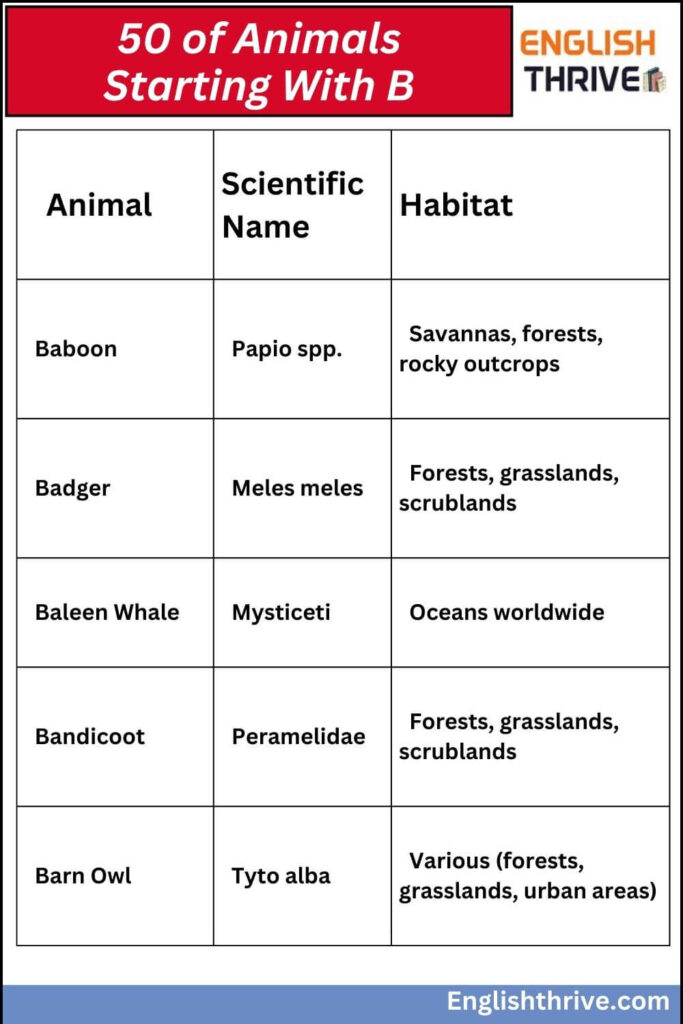
Table of Animals that Start with B
| Animal | Scientific Name | Habitat | Diet | Size | Lifespan |
|---|---|---|---|---|---|
| Baboon | Papio spp. | Savannas, forests, rocky outcrops | Omnivorous (fruits, insects, small animals) | Up to 4 feet in length | Up to 30 years |
| Badger | Meles meles | Forests, grasslands, scrublands | Omnivorous (insects, small mammals, plants) | Up to 3 feet in length | Up to 15 years |
| Baleen Whale | Mysticeti | Oceans worldwide | Filter-feeding (krill, small fish) | Up to 100 feet in length | Up to 100 years |
| Bandicoot | Peramelidae | Forests, grasslands, scrublands | Omnivorous (insects, plants, small animals) | Up to 2 feet in length | Up to 3 years |
| Barn Owl | Tyto alba | Various (forests, grasslands, urban areas) | Carnivorous (small mammals, birds) | Up to 1.5 feet in length | Up to 20 years |
| Bat | Chiroptera | Various (forests, caves, urban areas) | Insectivorous (insects) | Up to 6 inches in length | Up to 20 years |
| Bear | Ursidae | Various (forests, tundra, mountains) | Omnivorous (varied diet) | Up to 8 feet in length | Up to 30 years |
| Beaver | Castor spp. | Freshwater environments (rivers, lakes) | Herbivorous (bark, leaves) | Up to 4 feet in length | Up to 24 years |
| Bedbug | Cimex lectularius | Urban environments | Hematophagous (blood) | Up to 0.2 inches in length | Up to 1 year |
| Bee | Apidae | Various (forests, grasslands, urban areas) | Herbivorous (nectar, pollen) | Up to 1.5 inches in length | Up to 5 years |
| Beetle | Coleoptera | Various (forests, grasslands, deserts) | Varied (plants, insects, carrion) | Up to 7 inches in length | Up to 3 years |
| Bighorn Sheep | Ovis canadensis | Mountainous regions | Herbivorous (grasses, leaves) | Up to 6 feet in length | Up to 15 years |
| Bilby | Macrotis lagotis | Deserts, grasslands | Omnivorous (insects, plants) | Up to 2 feet in length | Up to 10 years |
| Binturong | Arctictis binturong | Tropical forests | Omnivorous (fruits, insects, small animals) | Up to 3 feet in length | Up to 20 years |
| Bird | Aves | Various (forests, grasslands, urban areas) | Varied (insects, seeds, fish) | Varied | Varied |
| Bison | Bison bison | Grasslands, forests | Herbivorous (grasses, leaves) | Up to 11.5 feet in length | Up to 20 years |
| Black Bear | Ursus americanus | Forests, mountains | Omnivorous (varied diet) | Up to 6 feet in length | Up to 25 years |
| Black Mamba | Dendroaspis polylepis | Savannas, forests | Carnivorous (small mammals, birds) | Up to 14 feet in length | Up to 11 years |
| Black Rhinoceros | Diceros bicornis | Savannas, forests | Herbivorous (grasses, leaves) | Up to 12.5 feet in length | Up to 50 years |
| Black Widow Spider | Latrodectus spp. | Various (forests, grasslands, urban areas) | Carnivorous (insects) | Up to 1.5 inches in length | Up to 3 years |
| Blackbird | Turdus merula | Various (forests, grasslands, urban areas) | Omnivorous (insects, fruits, seeds) | Up to 10 inches in length | Up to 4 years |
| Blue Jay | Cyanocitta cristata | Forests, urban areas | Omnivorous (insects, fruits, seeds) | Up to 1 foot in length | Up to 7 years |
| Blue Whale | Balaenoptera musculus | Marine environments | Carnivorous (krill) | Up to 100 feet in length | Up to 110 years |
| Boa Constrictor | Boa constrictor | Tropical forests | Carnivorous (small mammals, birds) | Up to 13 feet in length | Up to 30 years |
| Bobcat | Lynx rufus | Forests, deserts | Carnivorous (small mammals, birds) | Up to 3 feet in length | Up to 15 years |
| Booby | Sula spp. | Coastal areas | Carnivorous (fish) | Up to 3 feet in length | Up to 20 years |
| Bowerbird | Ptilonorhynchidae | Tropical forests | Omnivorous (fruits, insects) | Up to 1.5 feet in length | Up to 30 years |
| Box Turtle | Terrapene spp. | Various (forests, grasslands, wetlands) | Omnivorous (insects, plants) | Up to 8 inches in length | Up to 100 years |
| Buffalo | Bubalus bubalis | Grasslands, forests | Herbivorous (grasses, leaves) | Up to 10 feet in length | Up to 25 years |
| Bullfrog | Lithobates catesbeianus | Freshwater environments (ponds, lakes) | Carnivorous (insects, small animals) | Up to 8 inches in length | Up to 10 years |
| Bulldog | Canis lupus familiaris | Domestic environments | Omnivorous (varied diet) | Up to 1.5 feet in length | Up to 10 years |
| Bullhead | Ameiurus spp. | Freshwater environments (rivers, lakes) | Omnivorous (insects, plants) | Up to 2 feet in length | Up to 6 years |
| Bumblebee | Bombus spp. | Various (forests, grasslands, urban areas) | Herbivorous (nectar, pollen) | Up to 1.5 inches in length | Up to 1 year |
| Burro | Equus africanus asinus | Deserts, grasslands | Herbivorous (grasses, leaves) | Up to 5 feet in length | Up to 30 years |
| Butterfly | Lepidoptera | Various (forests, grasslands, urban areas) | Herbivorous (nectar) | Up to 4 inches in length | Up to 1 month |
| Buzzard | Buteo buteo | Various (forests, grasslands, urban areas) | Carnivorous (small mammals, birds) | Up to 2 feet in length | Up to 25 years |
FAQs on Animals that start with B
What are some common animals that start with B?
Some common animals that start with B include baboons, badgers, baleen whales, bandicoots, and barn owls. These animals are found in various habitats around the world and have unique characteristics and behaviors that make them fascinating to study.
What is the largest animal that starts with B?
The largest animal that starts with B is the blue whale, which is also the largest animal on Earth. Blue whales can grow up to 100 feet in length and weigh as much as 200 tons. They are filter feeders that consume large amounts of krill and small fish, playing a crucial role in marine ecosystems.
What is the smallest animal that starts with B?
The smallest animal that starts with B is the bedbug, which is a tiny insect that feeds on the blood of humans and other warm-blooded animals. Bedbugs are typically about 0.2 inches in length and are known for their ability to hide in small cracks and crevices.
What are some endangered animals that start with B?
Some endangered animals that start with B include the black rhinoceros, the binturong, and the bison. These animals face threats due to habitat loss, poaching, and other human activities. Conservation efforts are underway to protect these species and their habitats.
What are some unique adaptations of animals that start with B?
Animals that start with B have a variety of unique adaptations that help them survive in their environments. For example, baleen whales have baleen plates in their mouths that allow them to filter feed on krill and small fish. Badgers have strong claws that enable them to dig burrows and forage for food. Barn owls have specialized feathers that allow them to fly silently, making them efficient hunters.
What are some interesting facts about animals that start with B?
There are many interesting facts about animals that start with B. For example, baboons have a complex social structure and are known for their intelligence and adaptability. Baleen whales can consume up to 4 tons of krill in a single day. Bandicoots are marsupials that carry their young in a pouch. Barn owls have excellent low-light vision, which helps them hunt at night.
Conclusion
In this comprehensive guide, we’ve explored the fascinating world of animals that start with B. From the mighty blue whale to the tiny bedbug, each creature has unique characteristics and behaviors that make them well-suited to their environments. Understanding these animals not only enriches our knowledge but also deepens our appreciation for the diversity of life on Earth.
As we’ve journeyed through this list, we’ve discovered the importance of conservation and the roles these animals play in their ecosystems. Many of these species face threats due to habitat loss, climate change, and human activities. By learning about and appreciating these animals, we can contribute to efforts to protect them and preserve their habitats.
So, the next time you encounter an animal that starts with B, take a moment to recall its unique name and the story behind it. Share this knowledge with others, and together, we can foster a deeper connection with the natural world. Let’s continue to explore, learn, and appreciate the incredible diversity of animals that start with B.